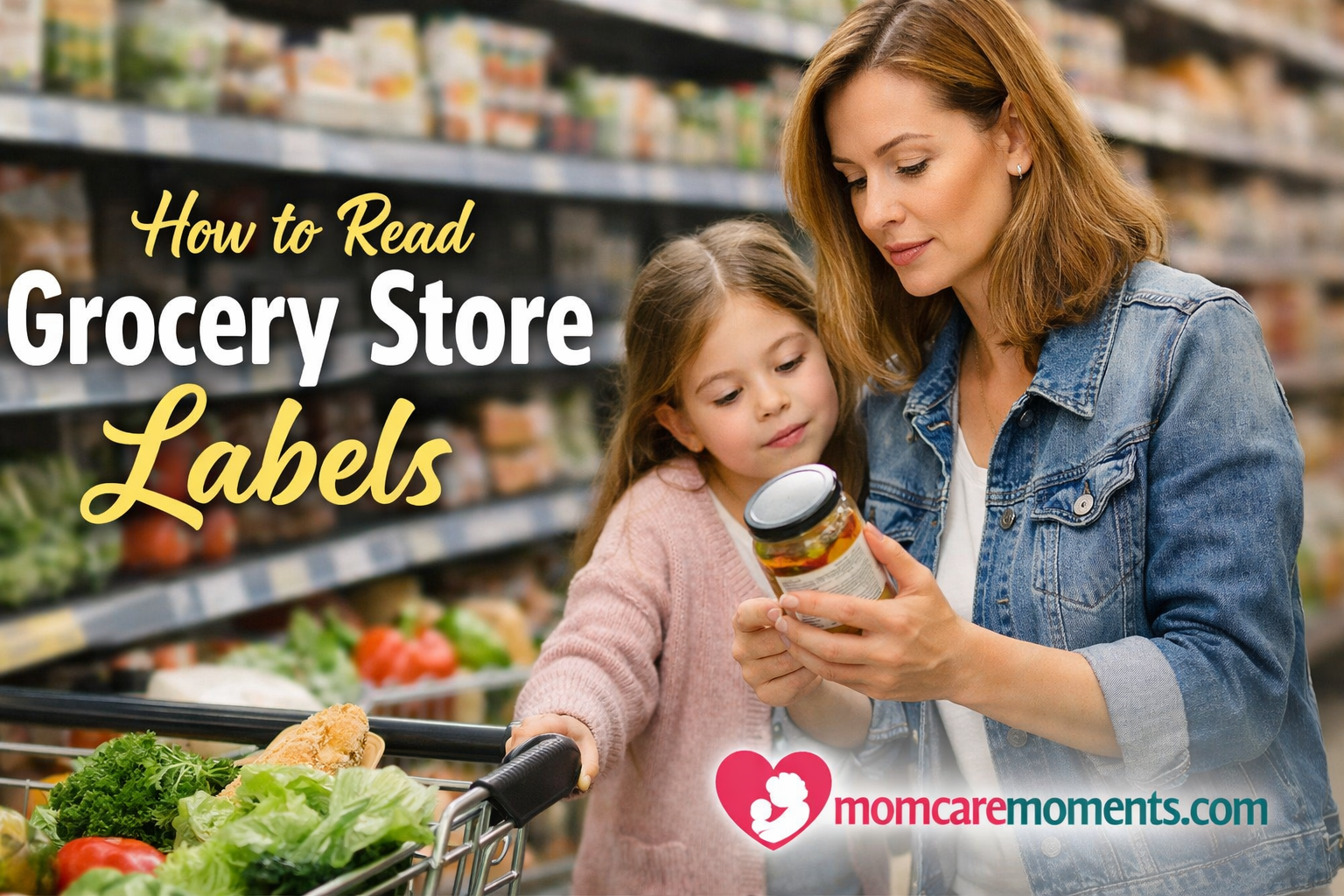
As a stay-at-home mom and also a work-at-home mom, grocery shopping is something I do regularly — but for a long time, I didn’t really pay attention to food labels.
I would quickly pick items off the shelf, trusting the packaging:
“Healthy,” “Low fat,” “Natural”…
But over time, I realized something important:
what’s written on the front of the package is not always the full story.
Learning how to read grocery store labels has helped me make better choices for my family, manage our budget, and feel more confident about what we’re eating.
If you’re a busy mom trying to balance family, work, and self-care, this simple guide will help you understand labels without feeling overwhelmed.
Why Reading Labels Matters for At-Home Moms
When you’re the one buying and preparing most of the food, the ingredients you choose matter. Reading labels helps you:
- Avoid unnecessary sugar, sodium, and additives
- Choose nutrient-dense foods to keep your family energized
- Save money by making smarter, informed purchases
- Avoid falling for misleading health claims on packaging
How to Read Grocery Store Labels
1. Start with the Ingredient List
This is the first thing I now check — and it has made the biggest difference.
Ingredients are listed in order of quantity, meaning:
- The first ingredient = the largest amount
- The last ingredient = the smallest amount
What to look for:
✔ Short ingredient lists (simpler is better)
✔ Ingredients you recognize
What to watch out for:
- Too many artificial additives
- Long, complicated ingredient names
- Sugar listed in different forms
💛 Mom tip: If you can’t easily recognize most of the ingredients, think twice before buying.
2. Check the Nutrition Information Panel
This section gives you details about:
- Serving Size
Check the serving size first. Often, a package seems low in calories — until you realize it contains two or three servings.
Mom Tip: If your toddler snacks on something “single-serve,” double-check how many servings it actually contains.
- Calories Per Serving
Calories aren’t everything, but they give you a good idea of the energy you’re consuming. Compare similar items to find lower-calorie alternatives with better nutrition.
- Macronutrients: Fat, Carbs, and Protein
- Fats: Look for low saturated fat and zero trans fats.
- Carbs: Pay attention to total carbs and added sugars.
- Protein: Prioritize foods with enough protein to keep you full longer.
- Sugar
- Fiber
As a busy mom, I don’t overanalyze everything — I just focus on a few key things:
What I look at:
- Sugar content
- Fiber (higher is better)
- Protein (helps keep kids full longer)
3. Don’t Be Fooled by Marketing Words
This is something I learned the hard way.
Words like:
- “Natural”
- “Healthy”
- “Low fat”
can be misleading.
For example:
- Low-fat products may have more sugar
- “Natural” doesn’t always mean nutritious
Always check the back of the package — not just the front.
4. Compare Similar Products
When I started comparing labels, I realized how different similar products can be.
For example:
- Two brands of cereal can have very different sugar levels
- One snack may have more fiber and protein than another
Taking just a few seconds to compare helps you make better choices.
5. Focus on What Works for Your Family
As a busy mom, I’ve learned that reading labels is not about being perfect.
It’s about:
- Making better choices step by step
- Choosing what works for your family
- Staying within your budget
You don’t need to read every detail — just focus on the basics.
6. Keep It Simple (You Don’t Need to Be an Expert)
At first, reading labels can feel confusing.
But with time, it becomes easier:
- You recognize ingredients faster
- You compare products quickly
- You shop with more confidence
💛 Mom reminder: Progress matters more than perfection.
What Do Those Labels Really Mean?
- Organic: USDA-certified means no synthetic pesticides or GMOs.
- Natural: Doesn’t mean much — not regulated strictly.
- No Added Sugar: Doesn’t mean sugar-free. Natural sugars (like in fruit) may still be present.
- Whole Grain: Look for “100% whole grain” for the real deal.
- Gluten-Free: Necessary only if you or your family is gluten-intolerant.
Common Grocery Store Label Red Flags
Avoid these ingredients or claims:
- “Low-fat” or “fat-free” often means more sugar or additives
- “Fruit-flavored” — may not contain real fruit
- “Light” — may refer to texture or color, not calories
Label Reading in Action: Real-Life Examples
Here’s how I read labels as a work-at-home mom:
- Snack bars for kids? I compare sugar content and opt for ones with protein and fiber.
- Cereal? I look for whole grains as the first ingredient, under 8g sugar per serving.
- Yogurt? I skip the fruit-on-the-bottom versions and buy plain Greek yogurt with fresh fruit added at home.
Quick Label Reading Checklist for Moms
✔ Check serving size
✔ Scan sugar and sodium levels
✔ Look for whole ingredients
✔ Skip artificial additives
✔ Compare similar products to find the healthiest option
Final Thoughts: Empower Your Grocery Trips
You don’t have to be a nutritionist to feed your family well — just a little label-reading knowledge goes a long way. With practice, reading labels becomes second nature, and you’ll feel more confident navigating the grocery aisles.
From one at-home mom to another: this small skill makes a big impact — for your energy, your kids’ growth, and your peace of mind.
💡 Related Posts You May Love:
- Grocery Shopping with Kids: Tips for a Stress-Free Trip
- Healthy Grocery Staples to Always Have on Hand
- Simple Meal Planning Tips for Busy At-Home Moms
- Grocery Store Mistakes Moms Should Avoid (And How to Fix Them!)
- How to Grocery Shop Once a Week Smart Grocery
- Shopping Tips for Moms on a Budget
- Basic Grocery List for At-Home Moms
- Buying in Bulk: Tips and Must-Have Bulk Items for Busy Moms
🛒 Amazon Essentials to Help Moms Read Grocery Labels Like a Pro
1. Magnifying Glass Bookmark or Pocket Magnifier
For tiny print on ingredient lists and nutrition facts.
- 🔗 Perfect for moms who wear glasses or need to zoom in on tricky text.
➡️ Magnifying Bookmark on Amazon
2. Reusable Shopping Bags with Label Reminders
Some eco-friendly shopping bags now include printed checklists or health tips.
- 🛍 Encourage label-conscious choices while reducing plastic waste.
➡️ Reusable Grocery Bags with Reminders
3. Grocery List Notepad with Ingredient Checks
Helps you plan ahead by noting items to double-check for sugar, sodium, or additives.
- 📝 Save time and stay focused during shopping trips.
4. Healthy Pantry Staples Sampler Pack
Introduce readers to clean-label foods like organic grains, nut butters, or snacks.
- 🍪 Use as a practical example of clean, label-friendly products.
5. Label Reading Guide Book (for Moms or Beginners)
A simple pocket or Kindle guide on understanding food labels.
- 📚 Great for moms who love bite-sized learning.
➡️ Food Label Reading Guide on Amazon
6. Grocery Cart Organizer with Pockets
Keep your phone, pen, and label checklist handy while shopping.
- 🛒 For organized, distraction-free shopping.
7. Portable Nutrition Facts Scanner App (mention it even if not Amazon-based)
Recommend apps like Yuka, Fooducate, or MyFitnessPal to scan labels and break down what’s inside.